Design new product from scratch in the mental health space.
- Company
- Cold Start
- Domain
- Healthcare
- Discipline
- UI, UX, Research
Context
00 Pre-history
The initiator of the creation of the product was the venture company Cold Start. Cold Start founded the unicorn company in the child behavioral health domain and has 5 incubated companies in the portfolio.
02 Solution and value proposition
A modern subscription-based mental health service
03 Users
Patients - are people who are qualified to receive mental health care.
Goal
Test the demand for mental health service offerings by creating proof of concept of the service.
Phase 1. Discovery
01 Assumptions mapping
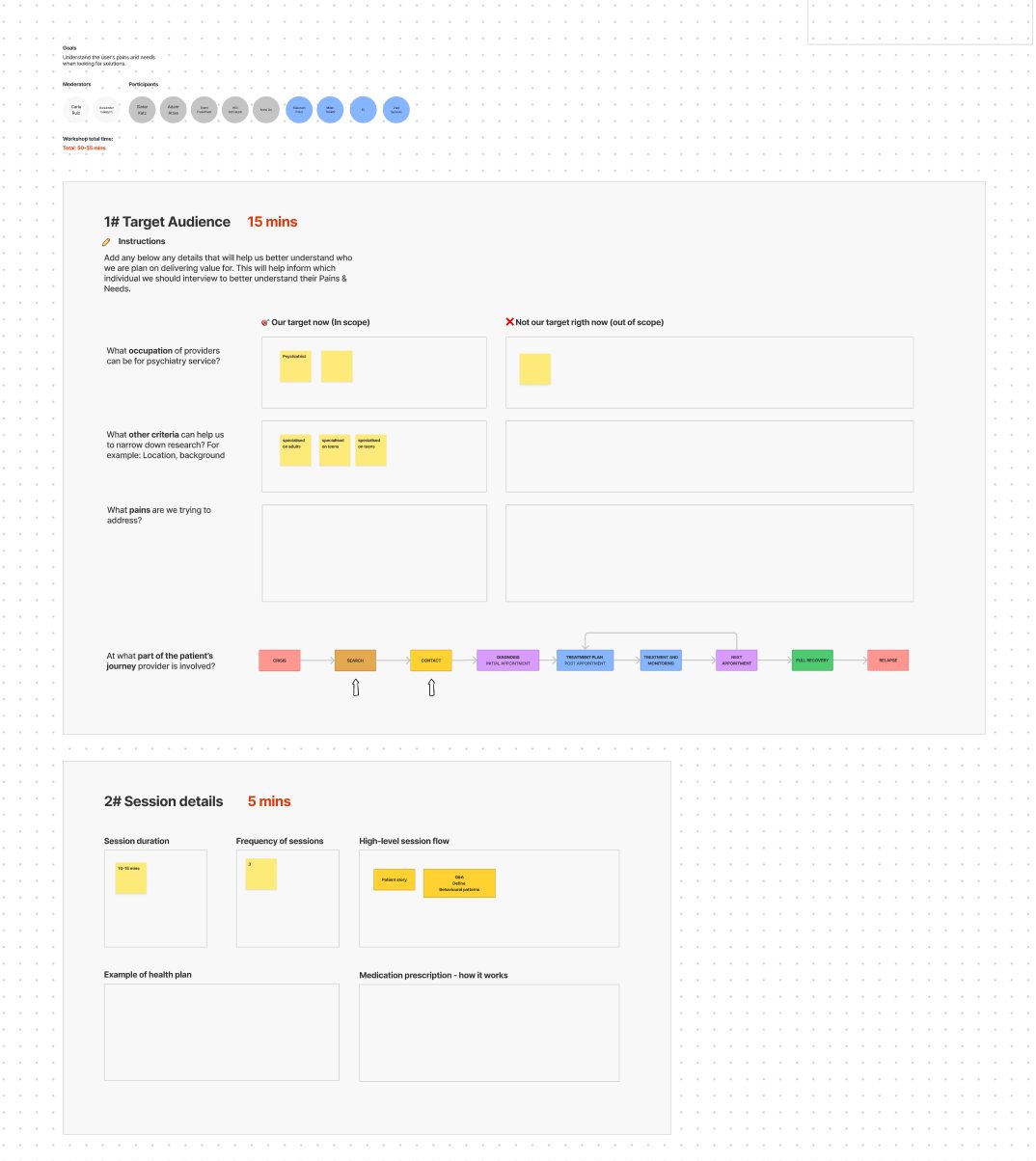
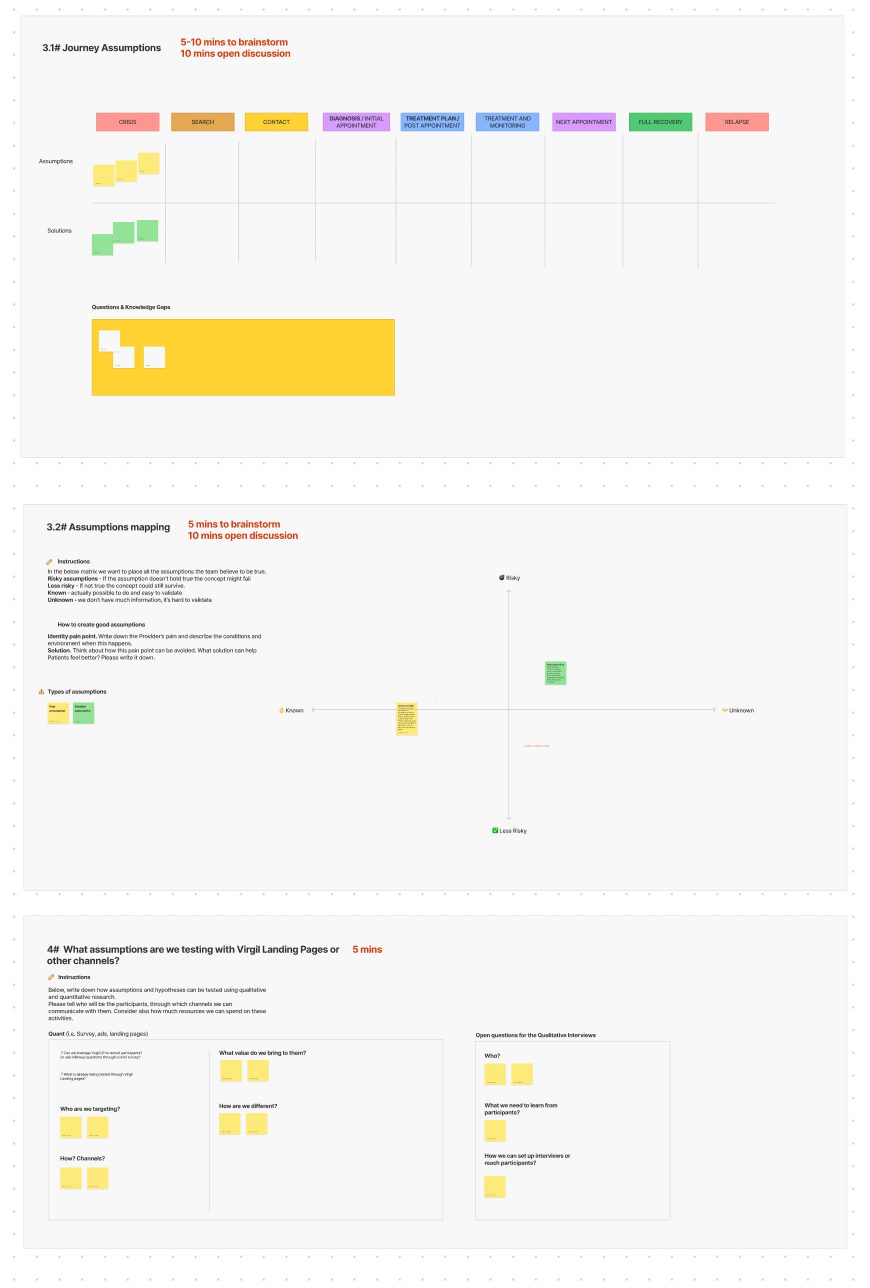
I conducted and facilitated a workshop with stakeholders to map all assumptions that we had at that point.
It consists of 2 parts:
- Target audience assumptions: Who are our clients? Who are not?
- Patient journey assumptions: How we can help patients at each stage of their journey?
02 Research plan
User research objectives
- Understand the patient's JTBD
- Identify patient personas & their needs
- Identify potential opportunity areas for the Psychiatry offering
In a healthcare UX design, we use ‘patient’ instead of ‘user’ to be more empathetical
03 Experts Interview
We conducted a series of experts interviews to have a better understanding about:
- the process of providing care
- common mental conditions and their treatment
- medication treatment (how it works)
- what are don’t s in interviewing patients.
Experts:
- Clinical director
- Licensed therapist
- Senior product manager with vast experience in the mental health space.
04 Competitors research
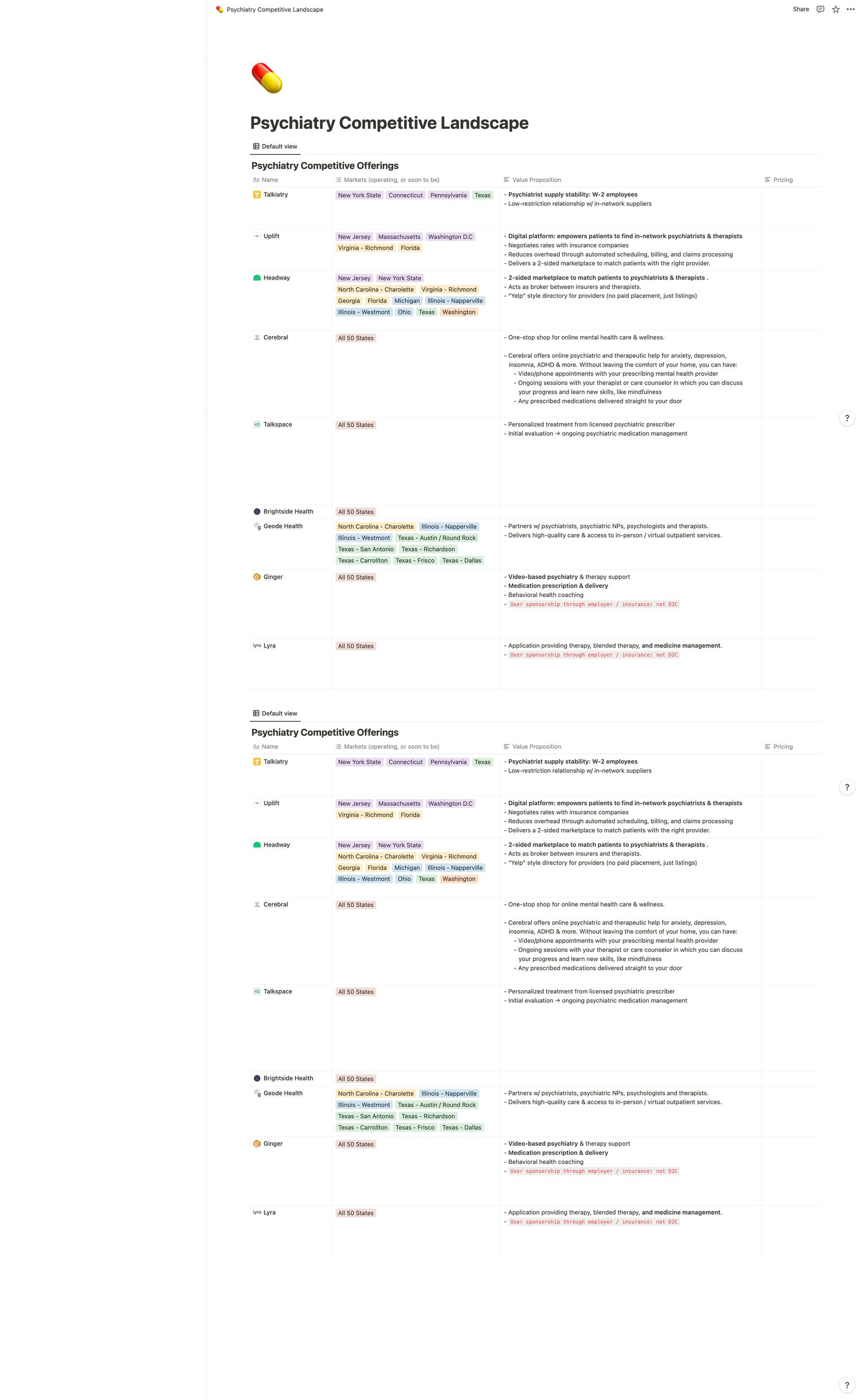
One of the important parts was to take a look at the value offering in a saturated competitors’ landscape. Also to have a useful source of references in terms of visual design.
05 Preparation for patient interviews
Summary
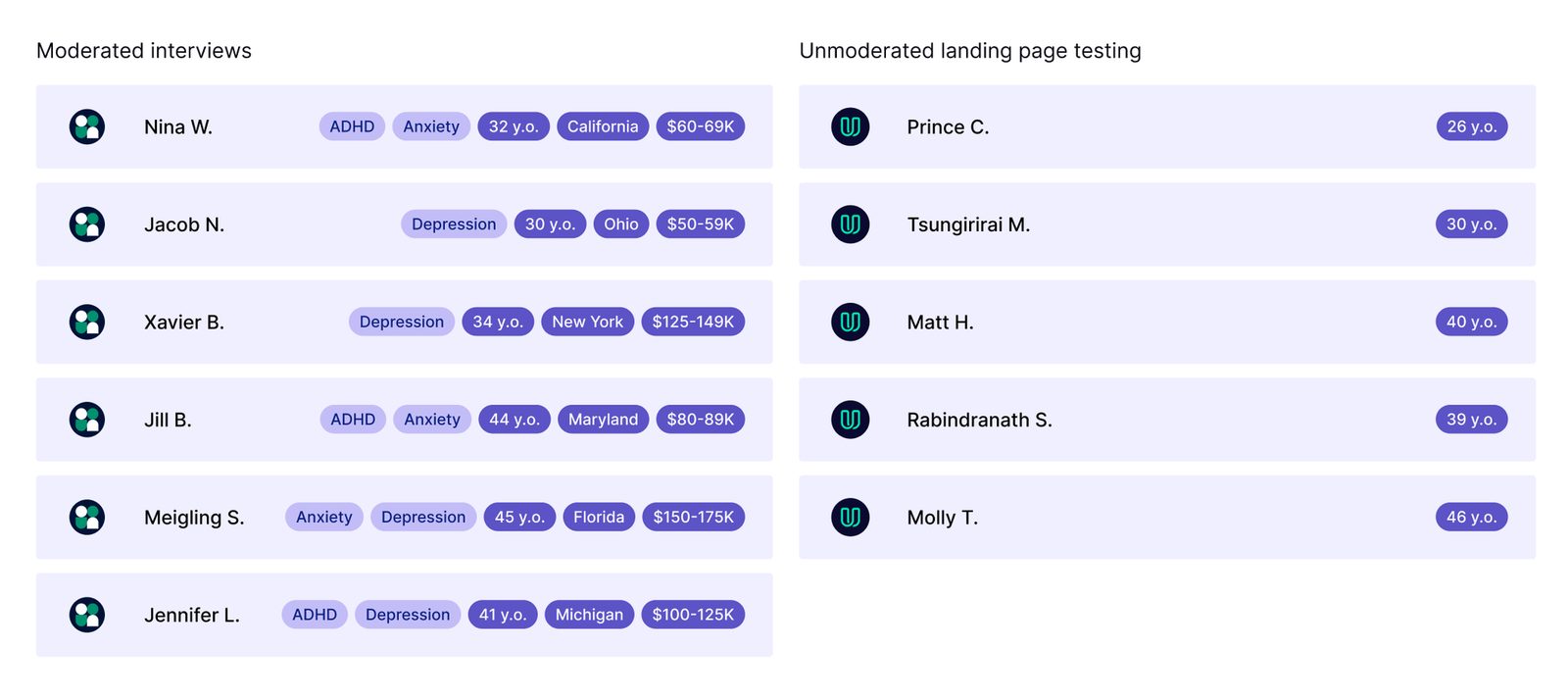
We spoke with 6 externally recruited users to identify potential opportunity areas for the Psychiatry offering and to understand users’ needs and motivations for using the service. In addition, we conducted 5 unmoderated user interviews to gather qualitative insights on the current landing page.
Unmoderated internal patients
01. Research Objectives
The below objectives are based on the key assumptions that were mapped by the wider team.
- Understand patient's JTBD, what they were hoping to achieve/find when they visited the landing page
- What are the main reasons why they decided to join or not to join
- Identify potential opportunity areas for the Psychiatry offering
- Identify different personas & needs
02. Methodology
- 30 mins interviews
- Open-ended questions
03. Patient, we plan to interview
Criteria to select which leads to reaching out to
- Leads that are considered dead leads and that have not converted
- Leads that don’t qualify for treatment
External recruited patients
Recruited via userinterviews.com
01. Research Objectives
The below objectives are based on the key assumptions that were mapped by the wider team.
- Understand patient's JTBD, what they were hoping to achieve/find
- Identify potential opportunity areas for the Psychiatry offering
- Identify different personas & needs
02. Methodology
- 60 mins interviews
- Open-ended questions
- Semi-structured
03. Patient, we plan to interview
- Have a mental health condition
- Qualified
Discussion guides
For internal and external patients there were prepared two discussion guides. The guide was enhanced and updated after each interview.
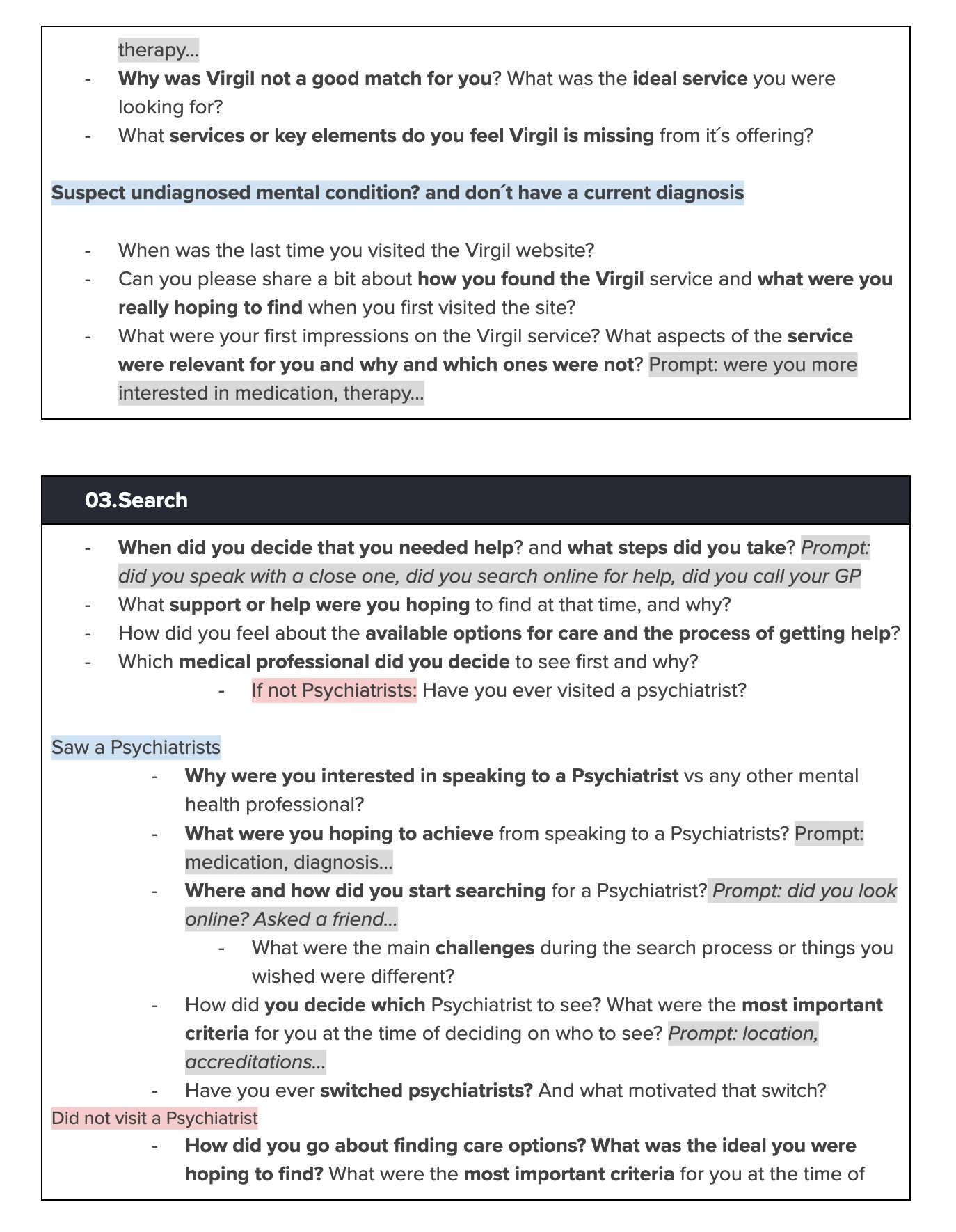
For the user research there been used following guidelines:
- Remote user research
- Writing a discussion guide
- How to write a screener survey
- Informed consent for user research
- Facilitation tips
- Observer guide
06 Interviews
For internal interviews I used userbrain.com.
For external interviews, I used Zoom video calls. Each interview was recorded.
07 Processing results
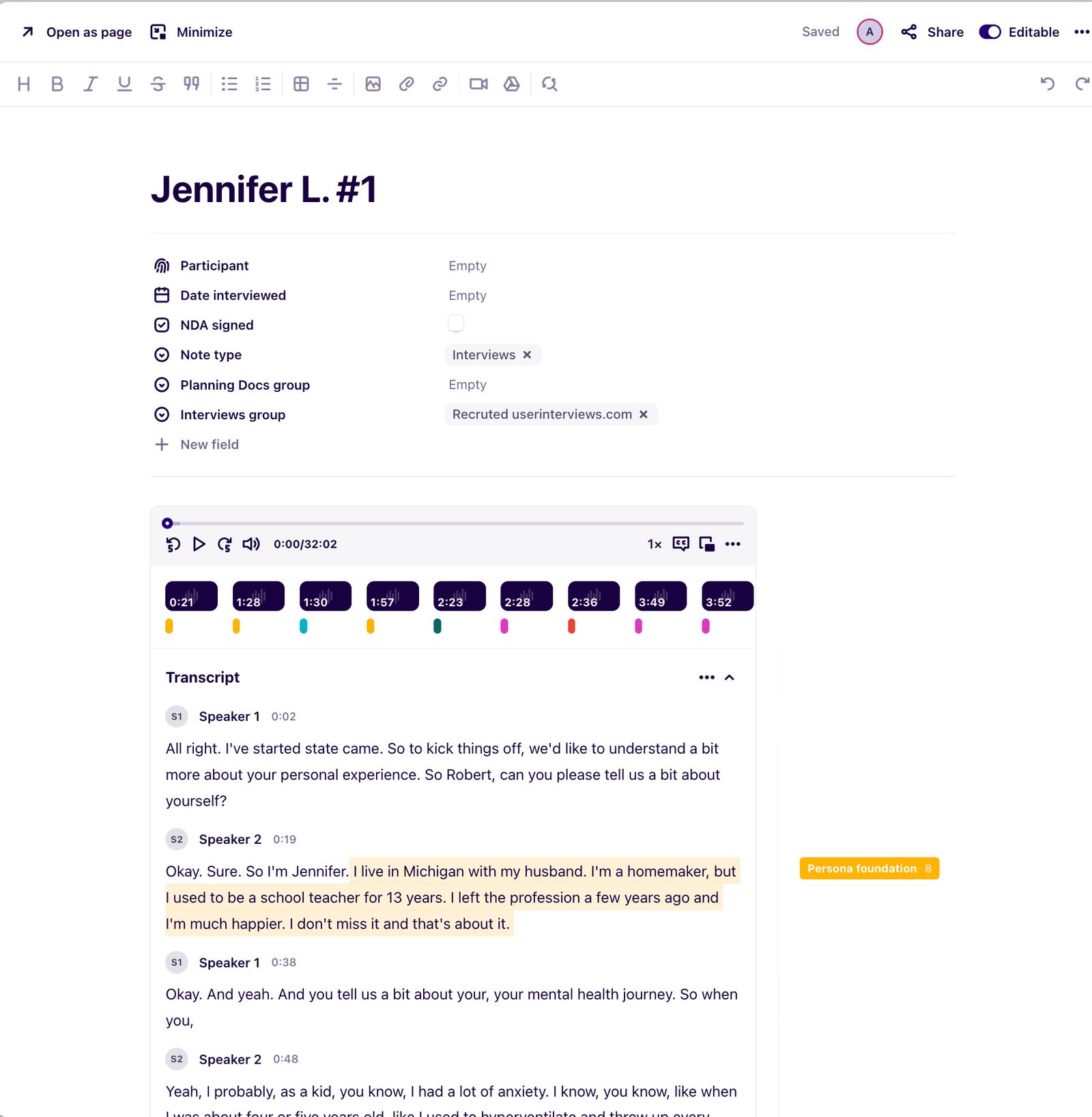
I used Dovetail.
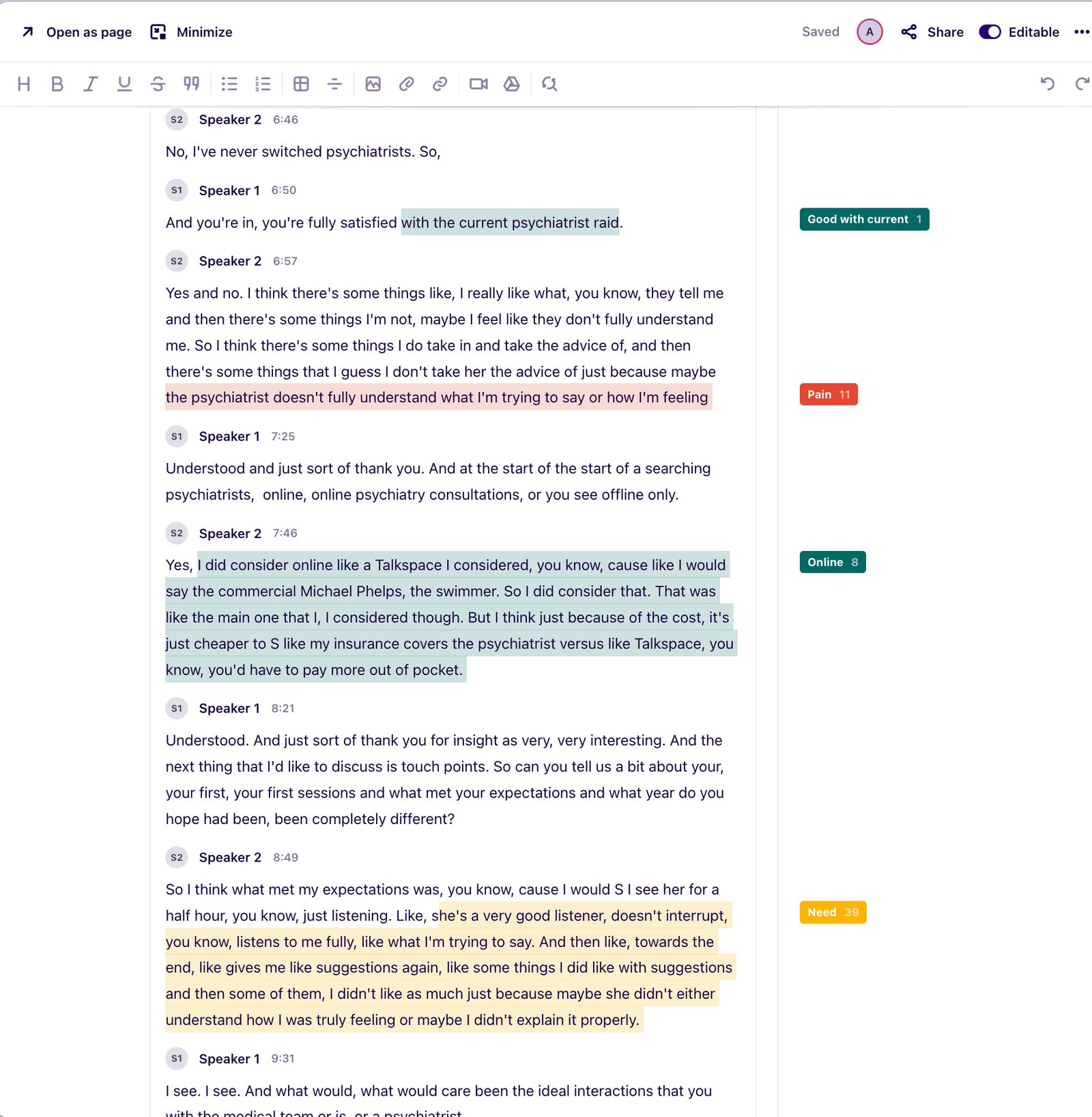
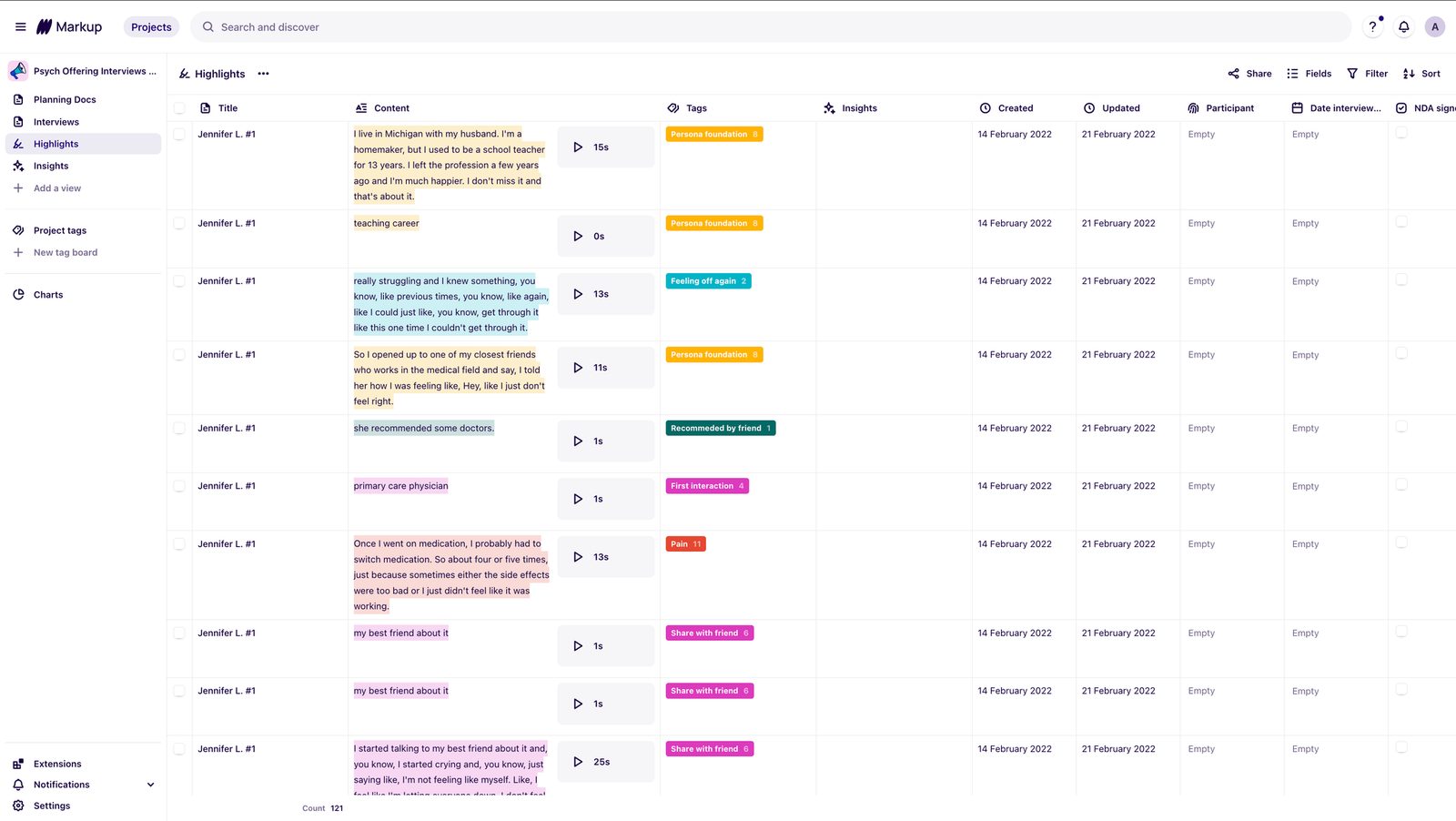
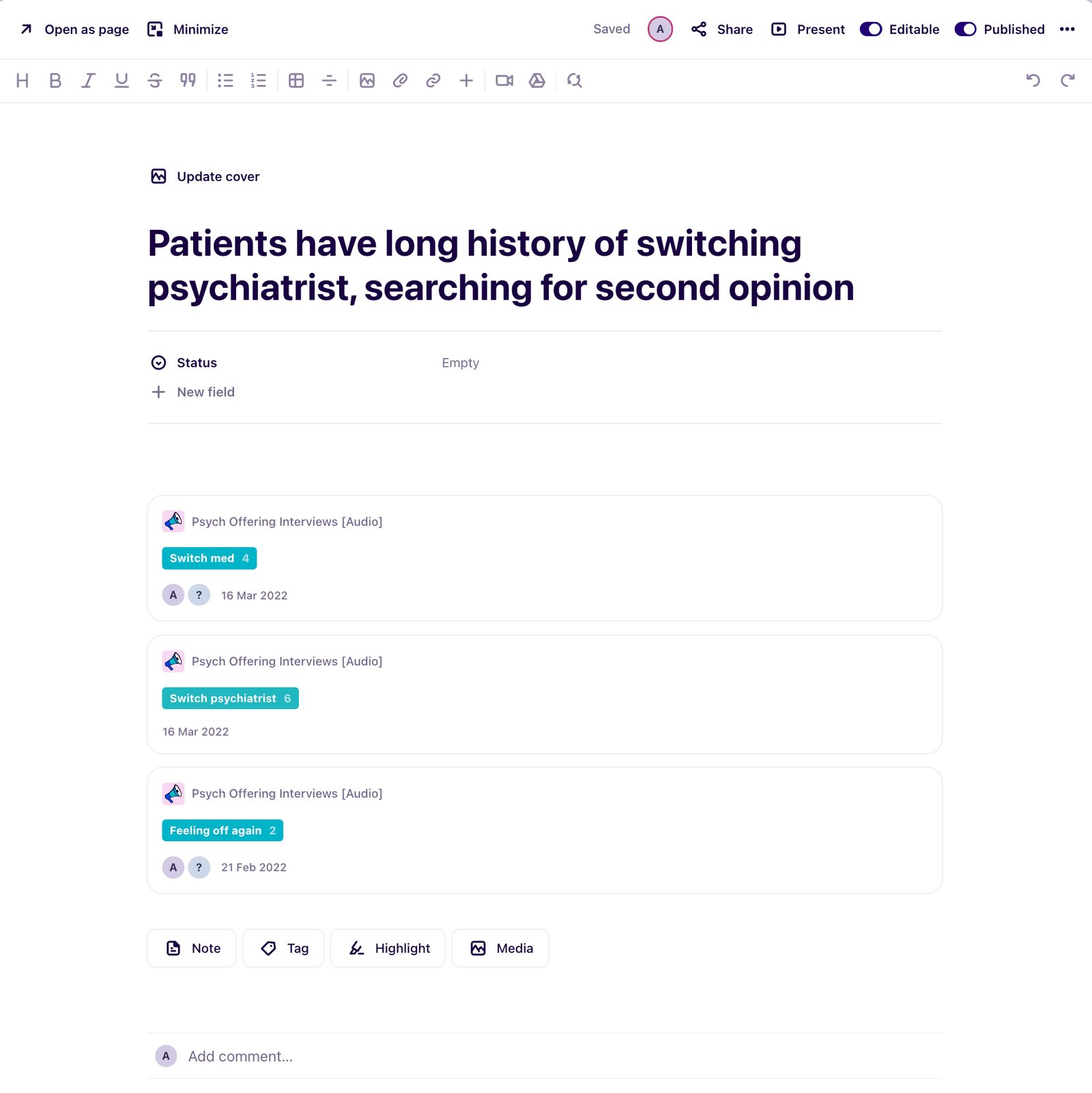
08 Personas
Summary
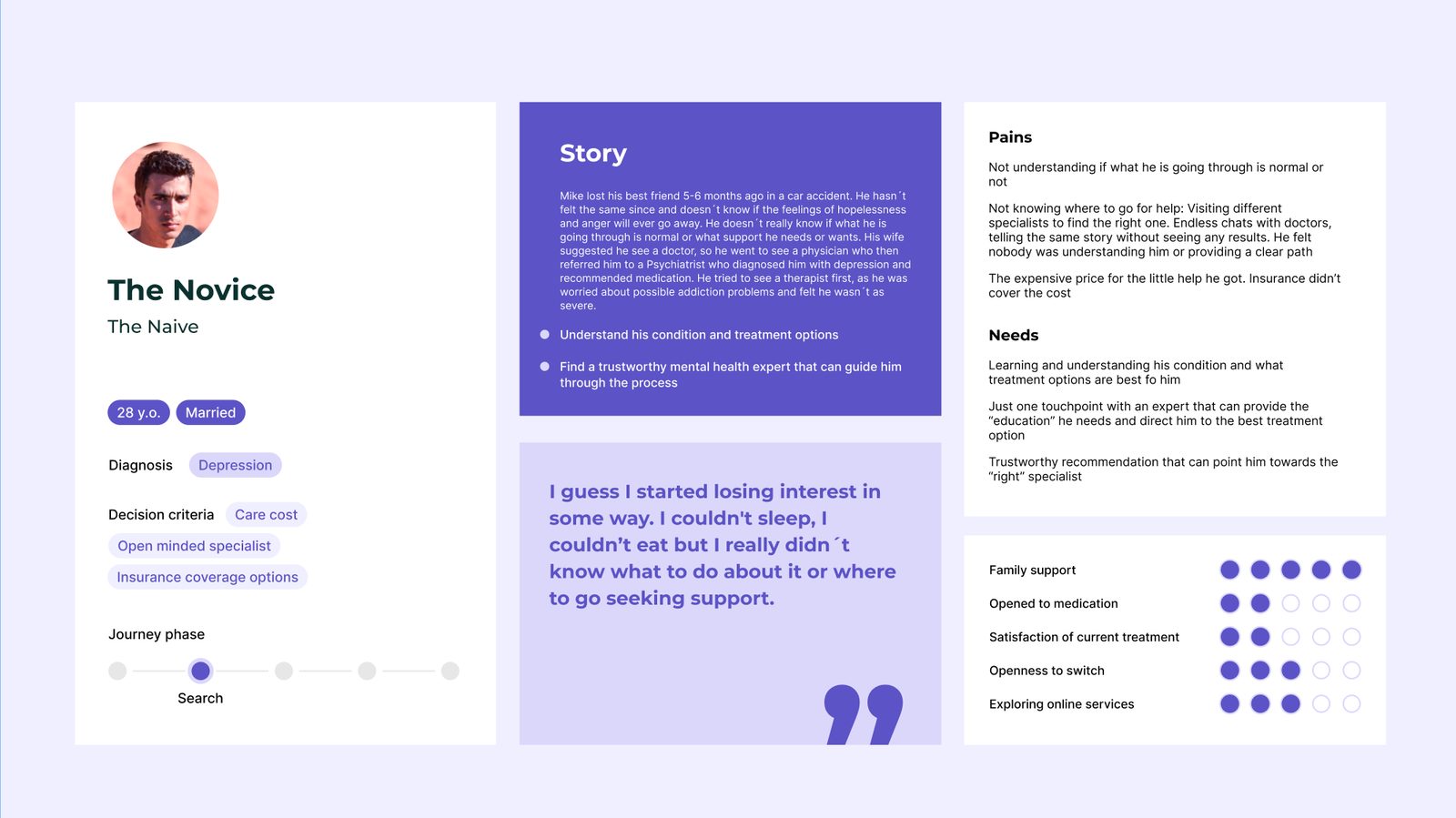
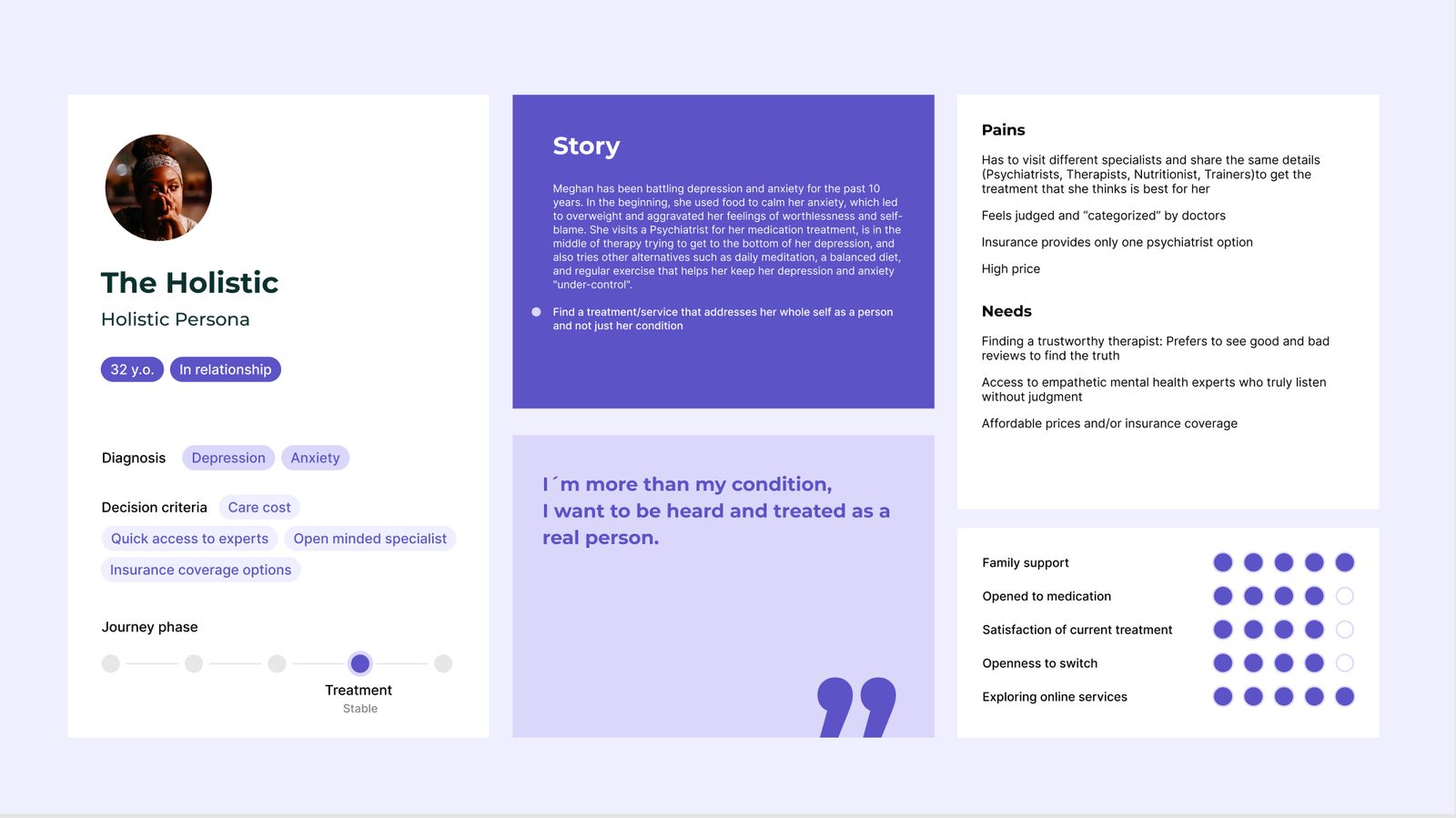
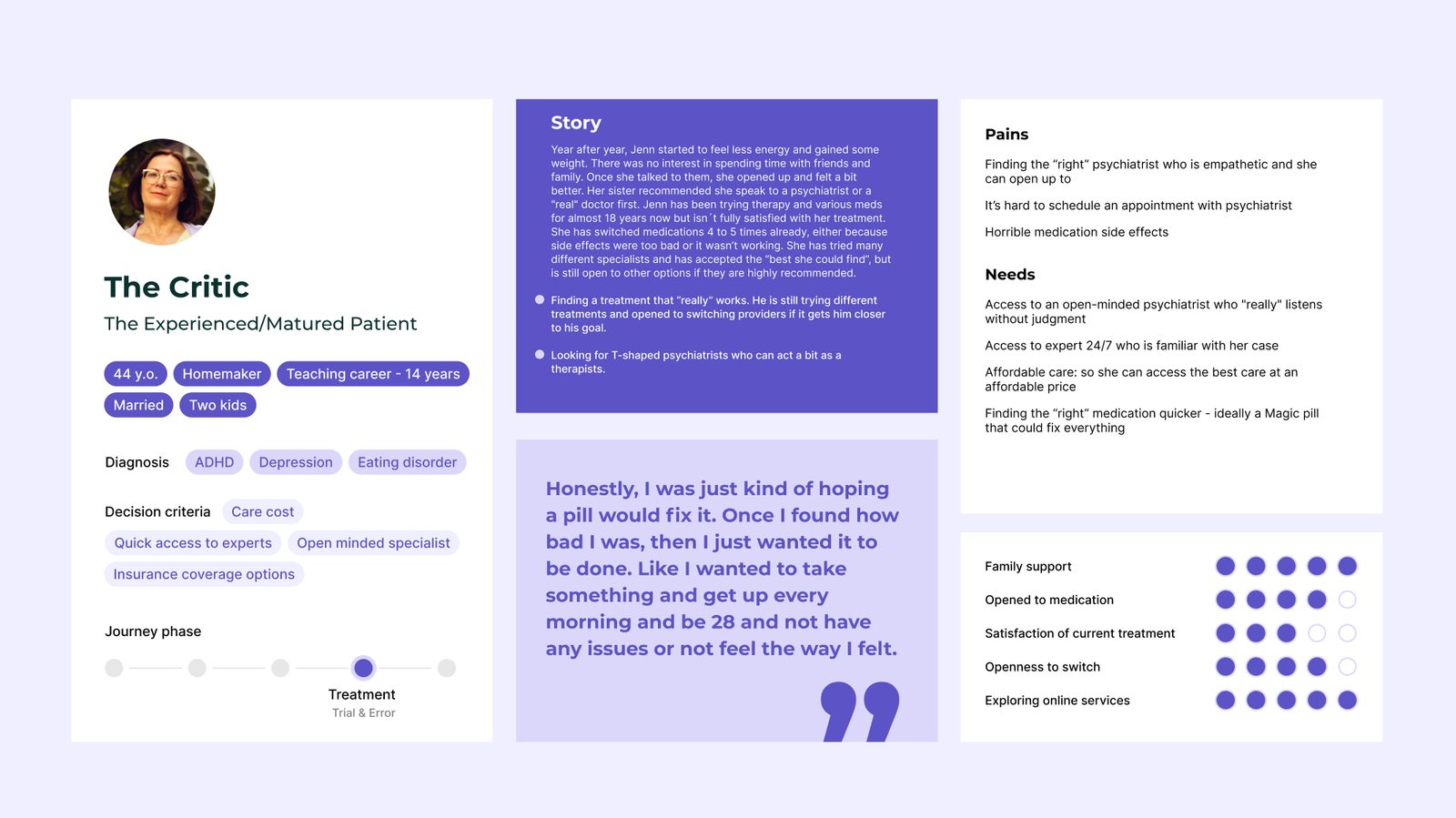
We identified 3 personas shared across the different roles:
The Critic — She wants to find a treatment that “really” works. She is open to switching providers if it gets her closer to his goal.
Holistic Persona — She wants to find a treatment/service that addresses her whole self as a person and not just her condition
The Naive — He wants to understand his condition and treatment options. He wants to find a trustworthy mental health expert that can guide him through the process
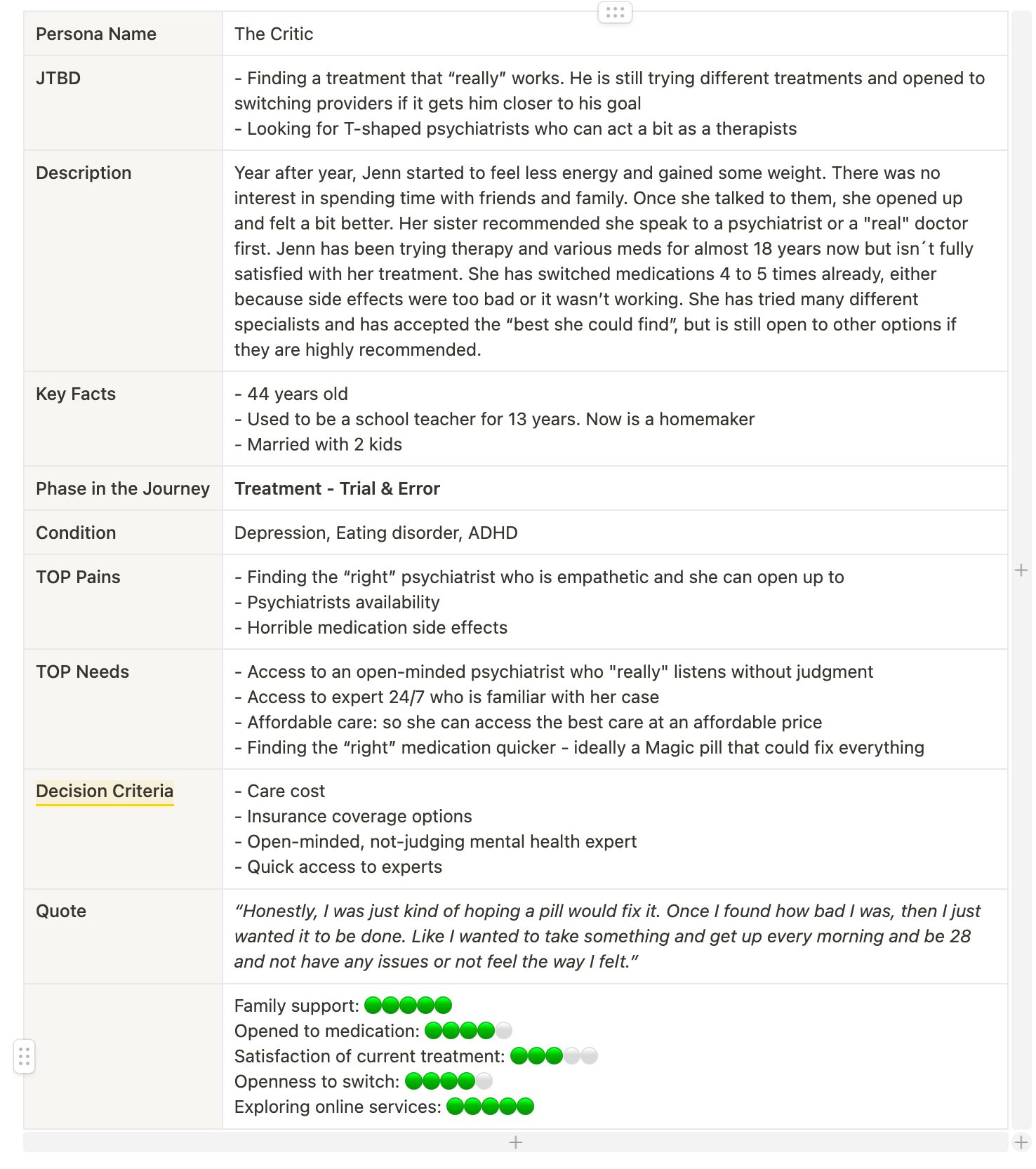
Final summary
09 Patient journey
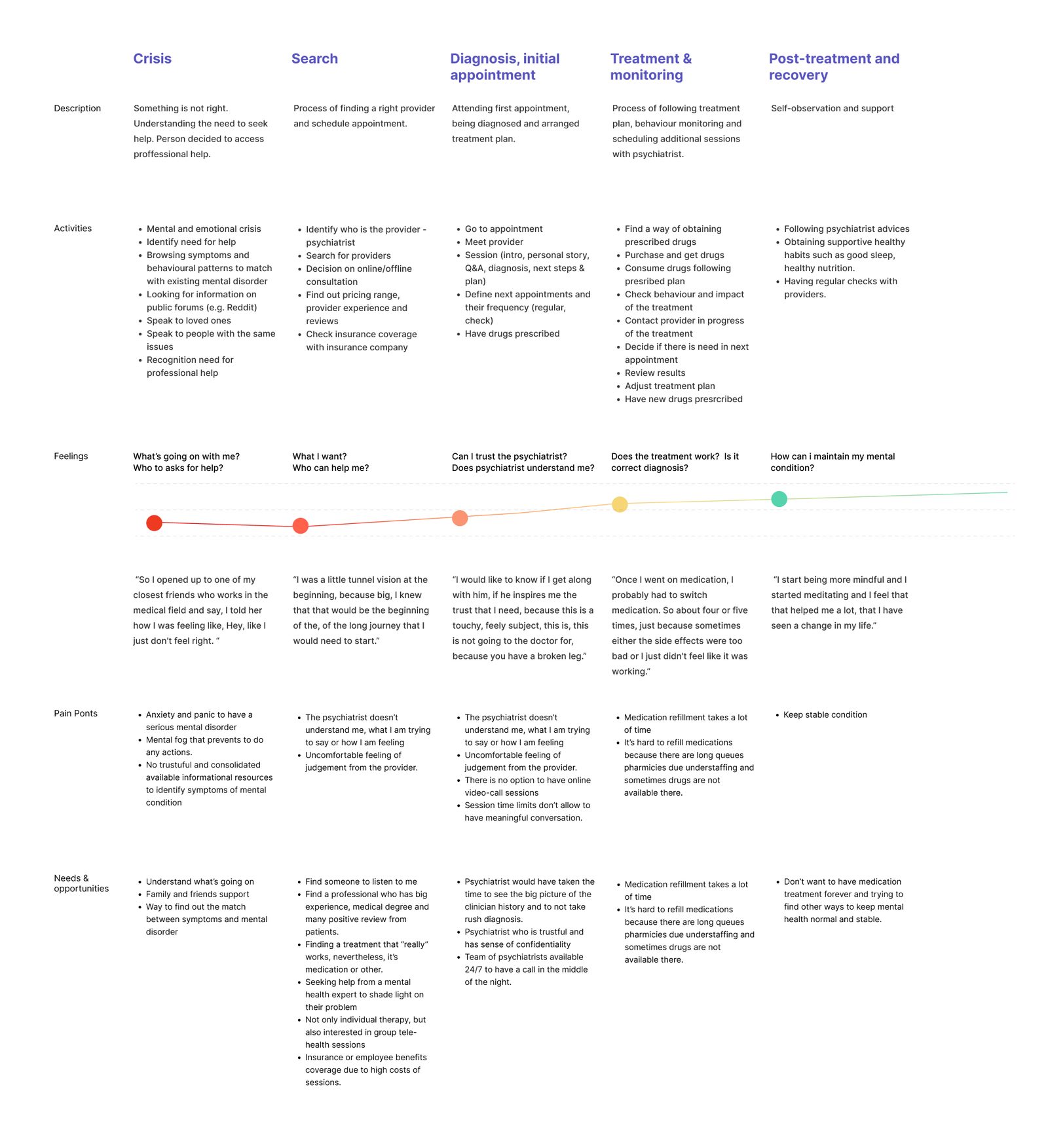
Based on patient personas we created the patient journey from the crisis to the recovery stage.
Discovery phase summary
01 Key Journey Takeaways
- Patients’ journey is a long story of understanding their condition and finding the right treatment.
- Patients often switch many specialists and psychiatrists before finding the “right” one.
- Patients want to switch to non-medication as soon as possible once they feel “it´s under control”.
02 Insights
Seeking help from a mental health expert to shed light on their problem
Patients at the beginning of the journey are not actively seeking a diagnosis or treatment what they want is reassurance and understanding of the root of the problem. They look for an open-minded psychiatrist who carefully listens and is eager to help.
”I could just confidentially like tell them like how I was feeling and they could try to give me some tips on like how to handle some of those thoughts or, you know, what else I could do, you know, just somebody that could like, listen to me without judgment was I think the biggest reason.”
Finding the “right”, open-minded psychiatrist takes them almost forever
Patients have a long history of switching psychiatrists and searching for a second opinion. Patients are not only looking into the Psychiatrists experience and credentials. They are also highly interested in finding the "right" Psychiatrist that will truly listen without judging with whom they can feel comfortable opening up and sharing their biggest fears. This is something difficult to assess without having met them, which often leads to trying different Psychiatrists until they find the one that feels "right".
”I would like to know if I get along with him if he inspires me the trust that I need because this is a touchy, feely subject, this is not going to the doctor because you have a broken leg.”
And 8 more insights
Phase 2. Concept Ideation
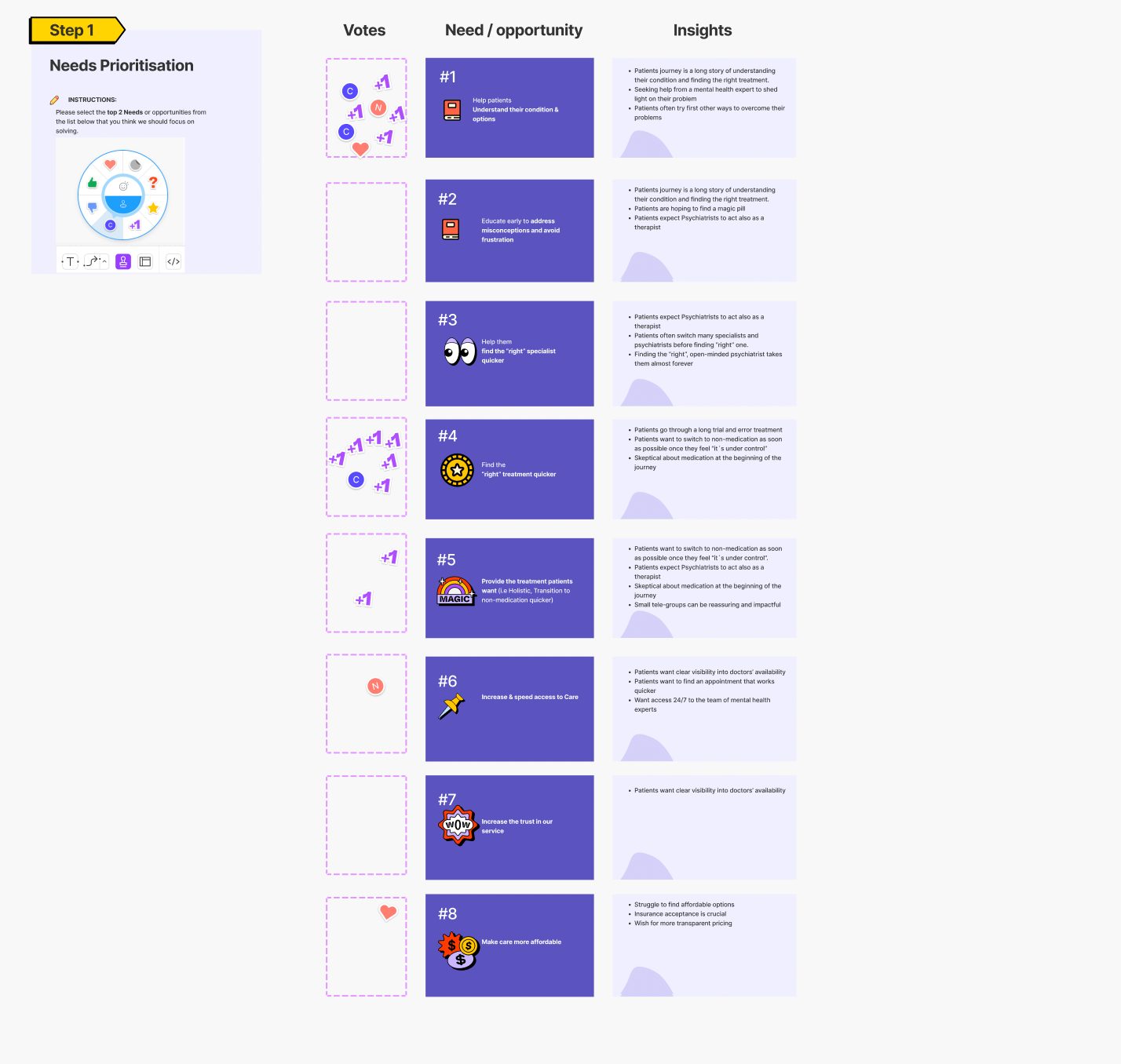
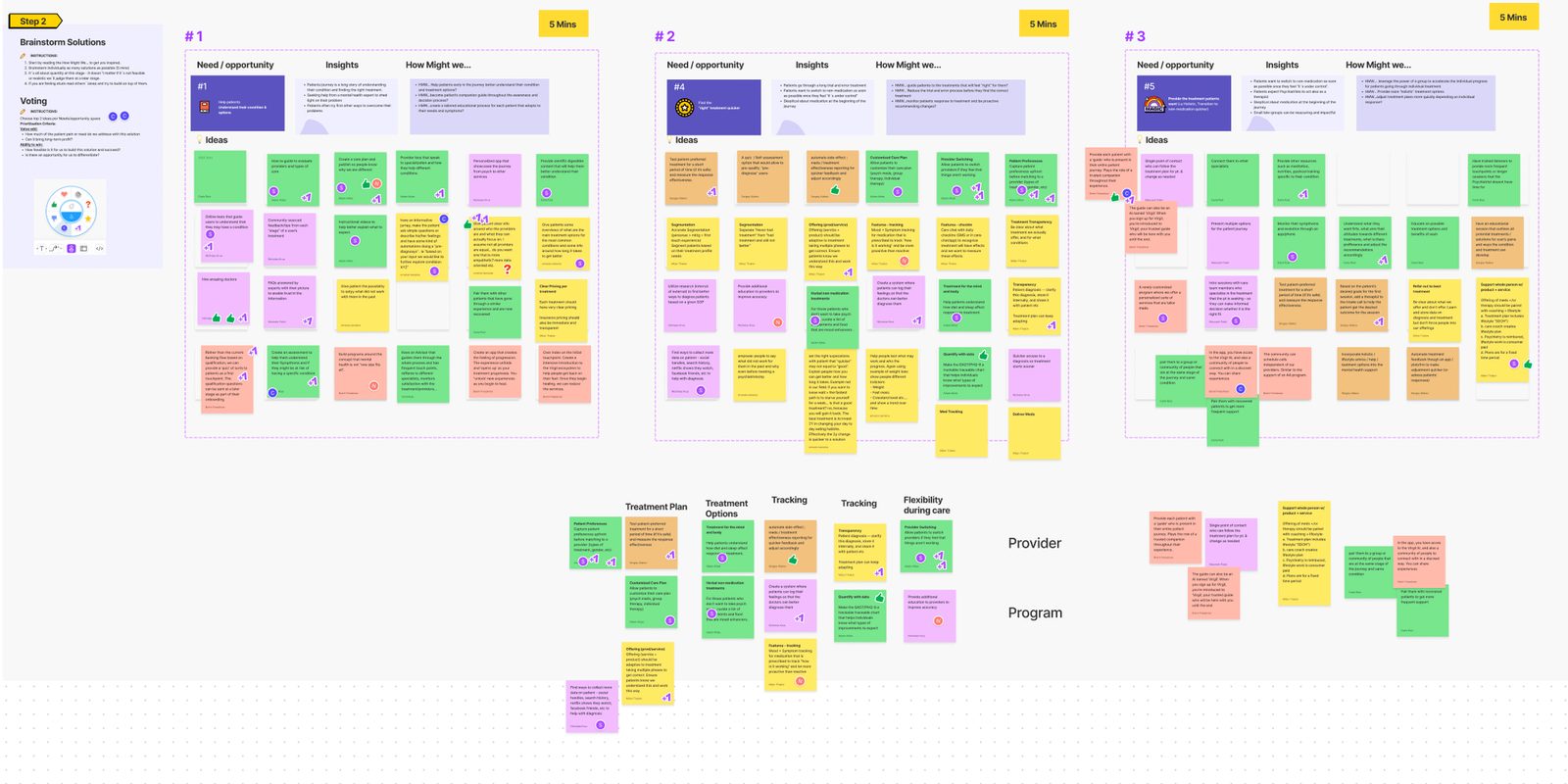
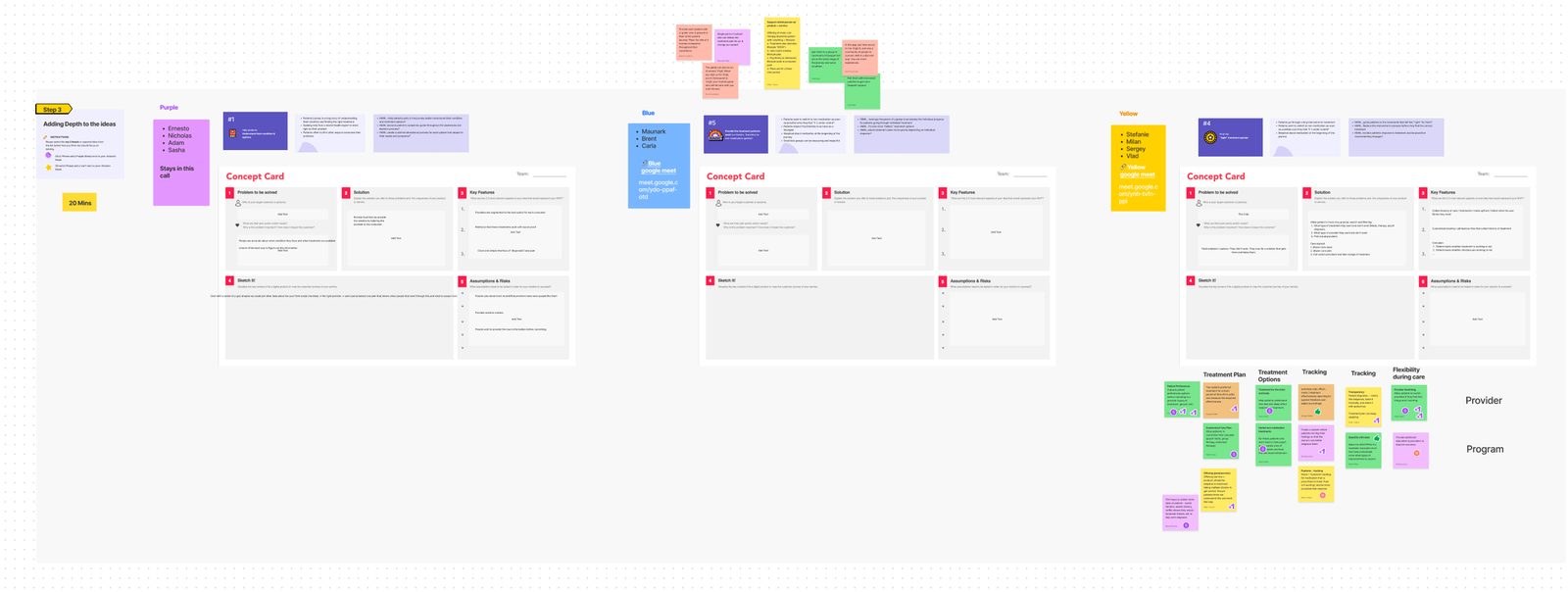
After the Discovery phase, we identified opportunity areas for further exploration. We can start with the ideation of the concept.
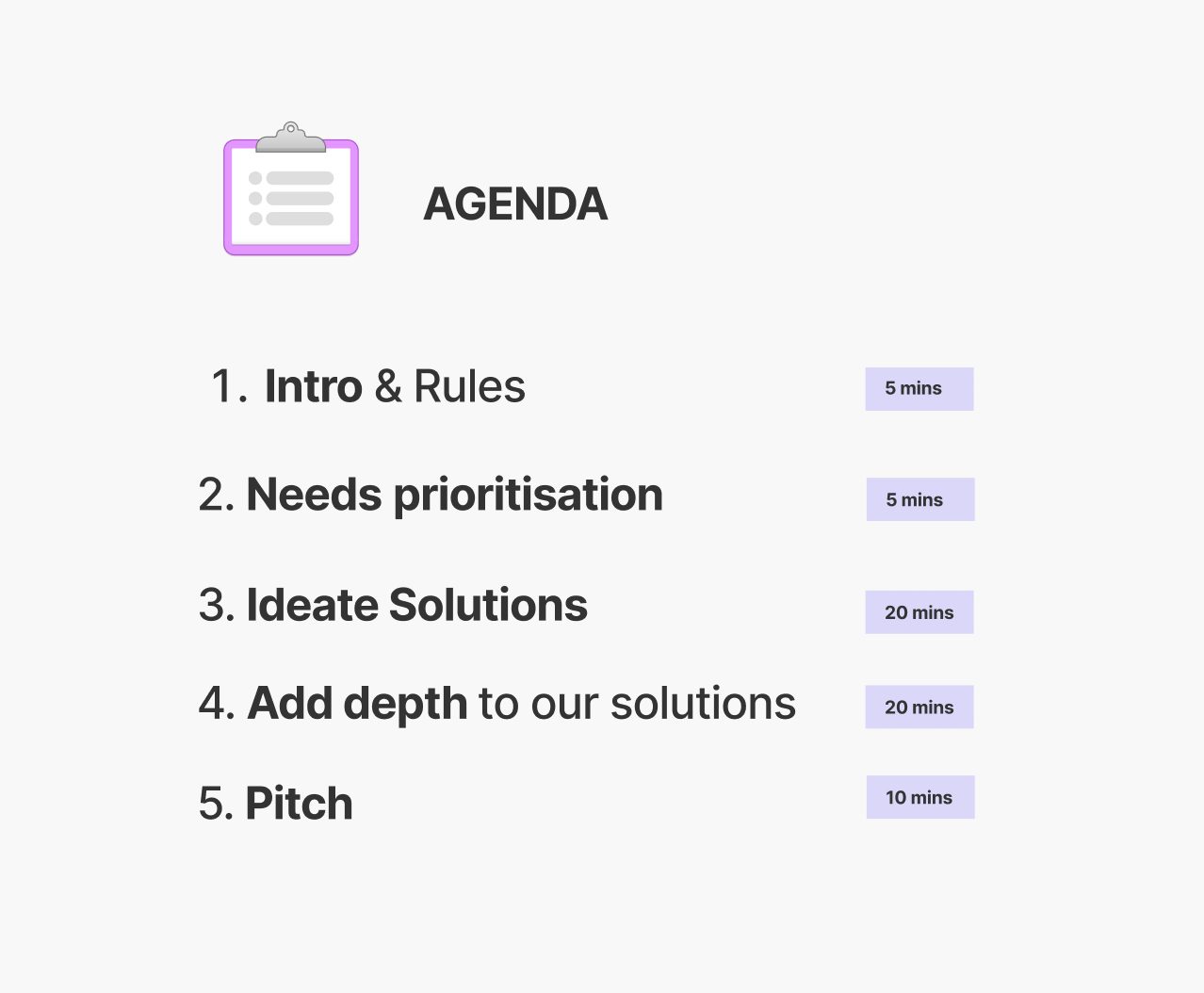
01 Concept ideation workshop
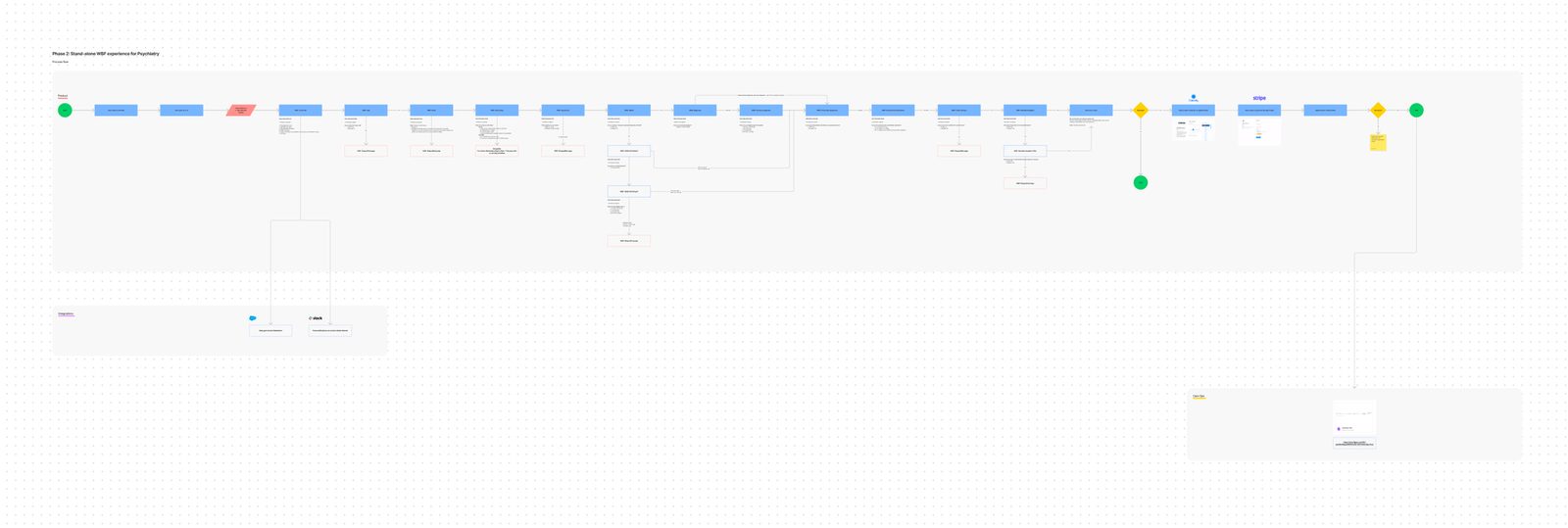
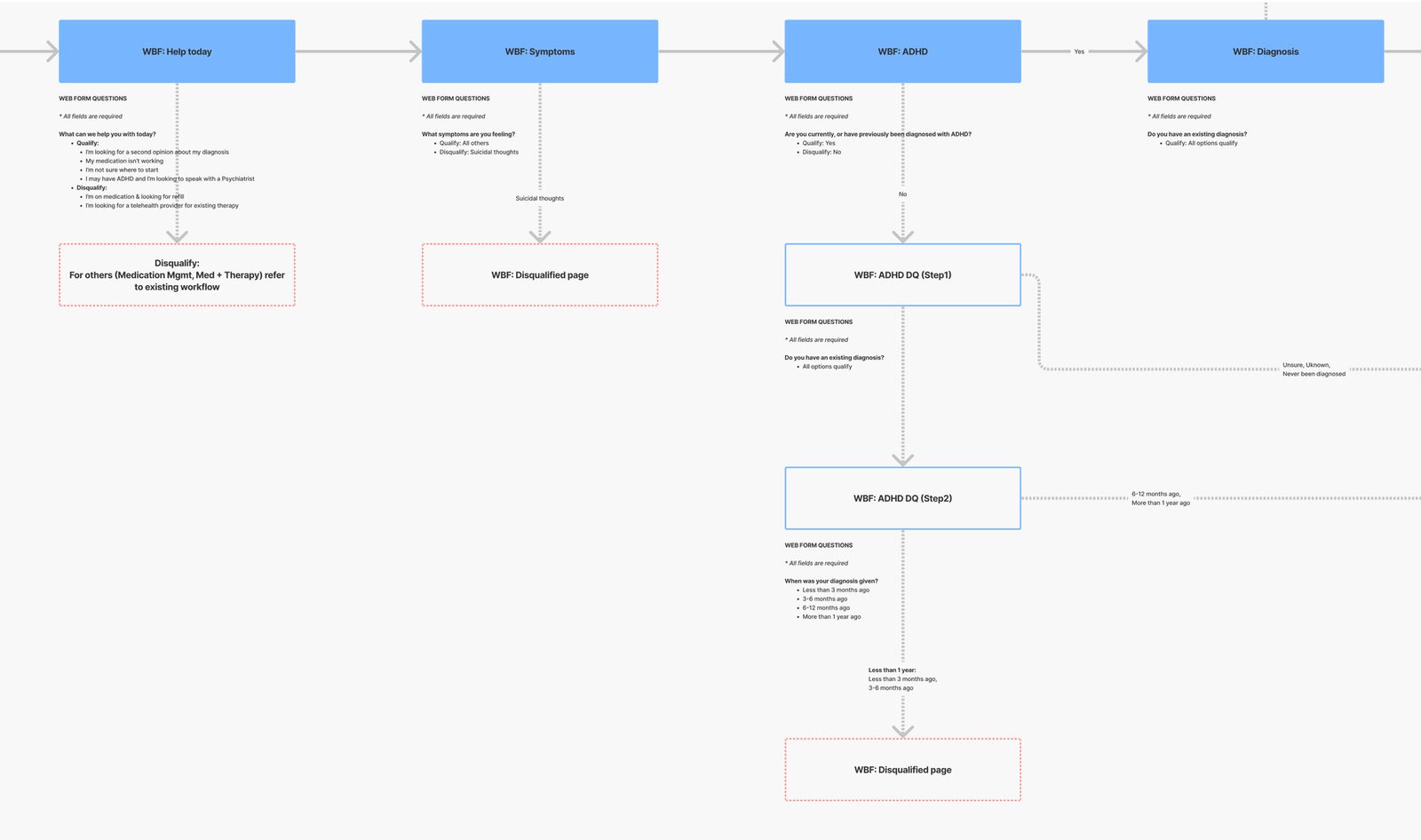
02 User flows
When we have a list of prioritized features, I started creating detailed user flows.
Phase 3. Design and testing
The concept will consist of two parts: landing page and web booking flow.
01 WBF
Design based on the user flow.
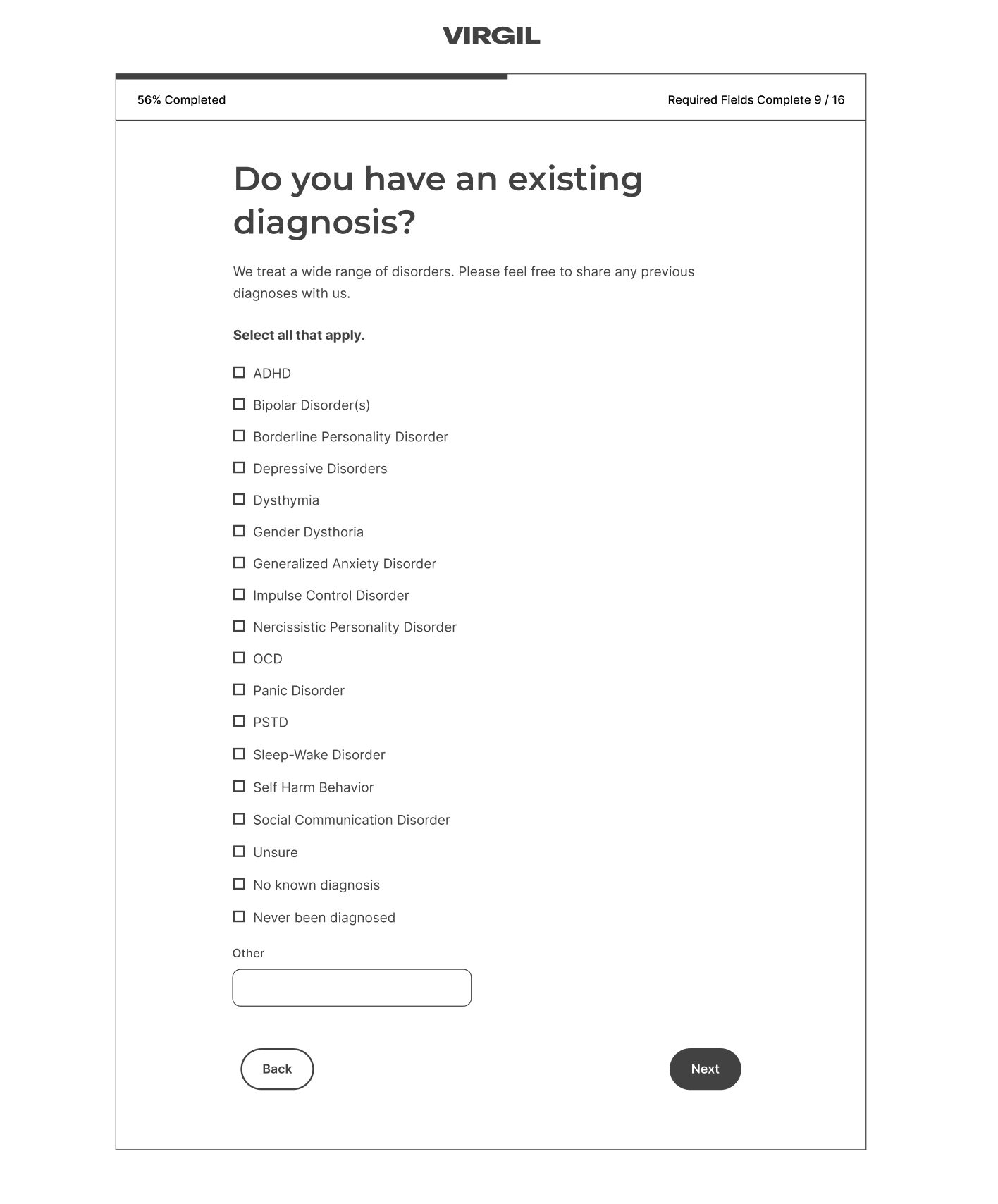
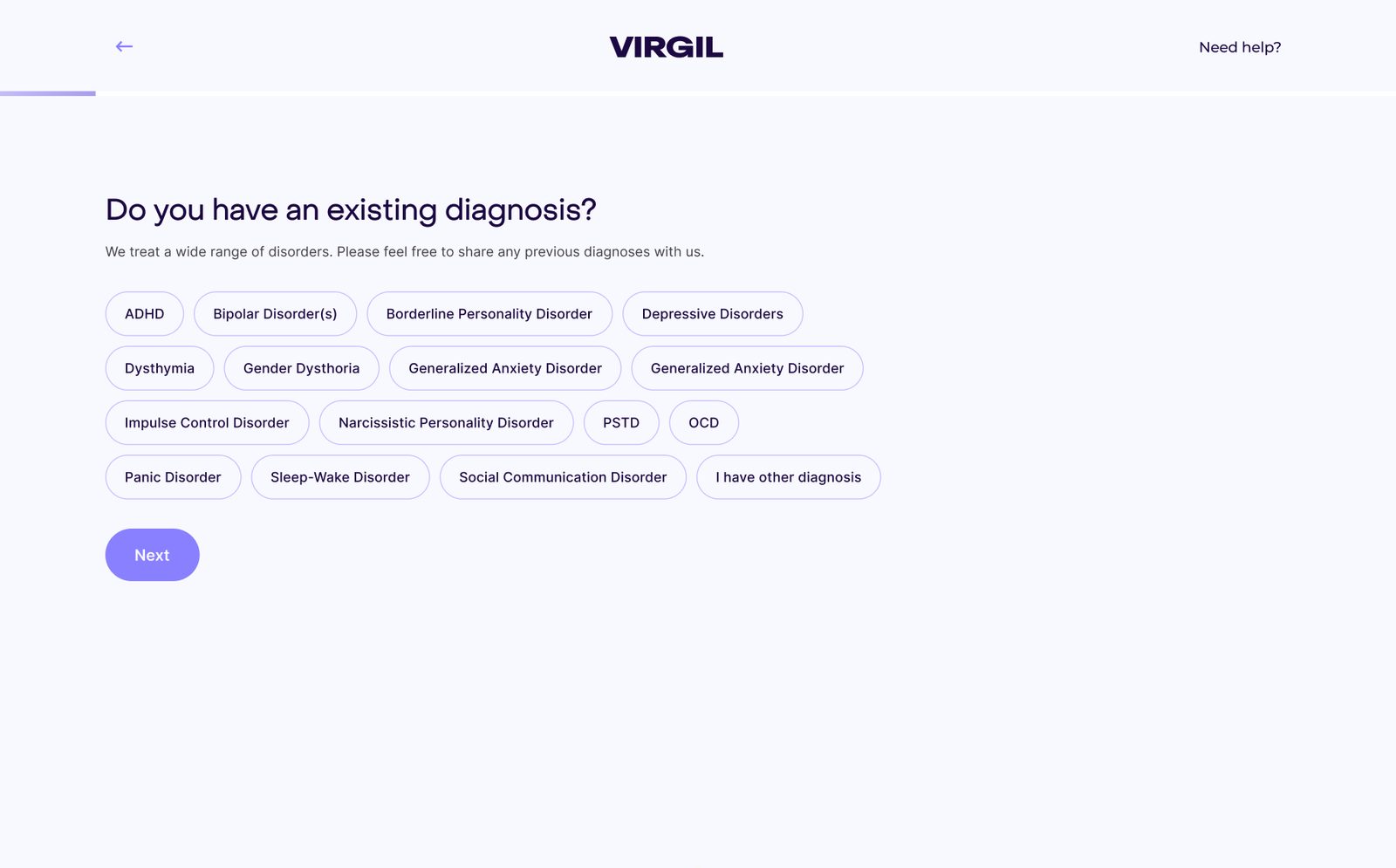
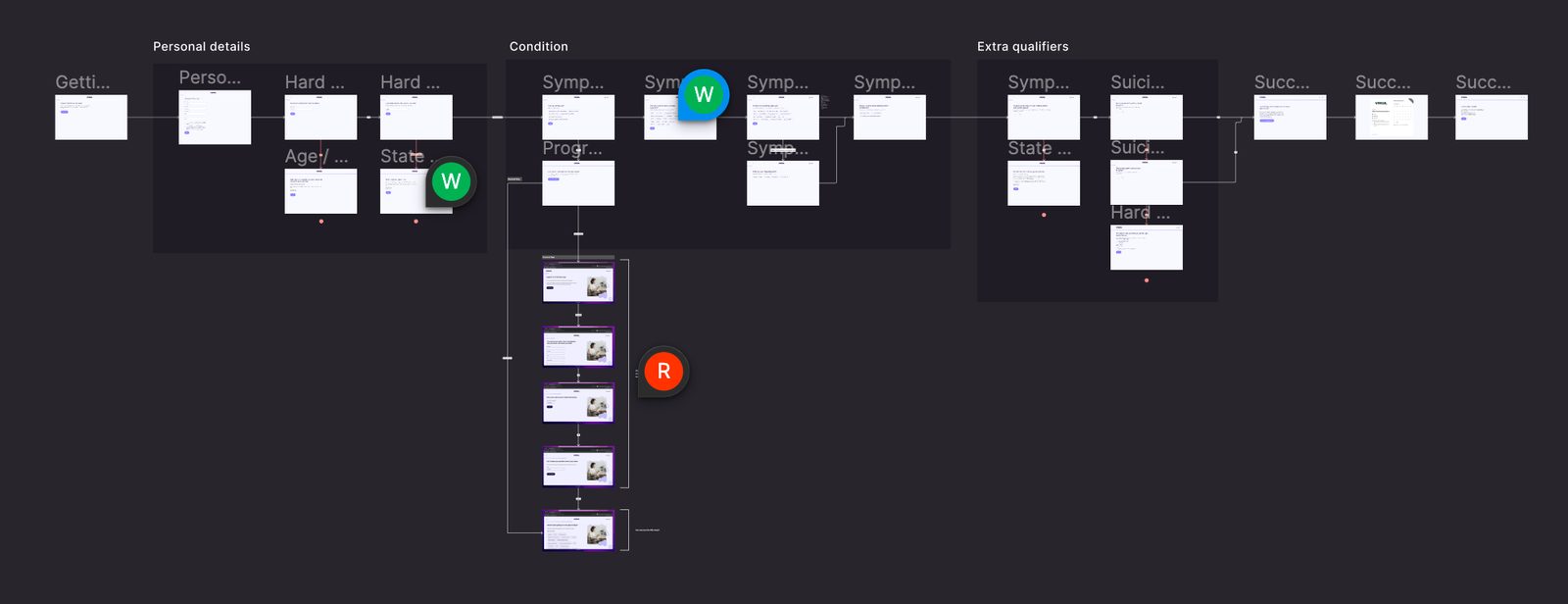
Developed using Typeform by me with software developer assistance.
02 Landing page
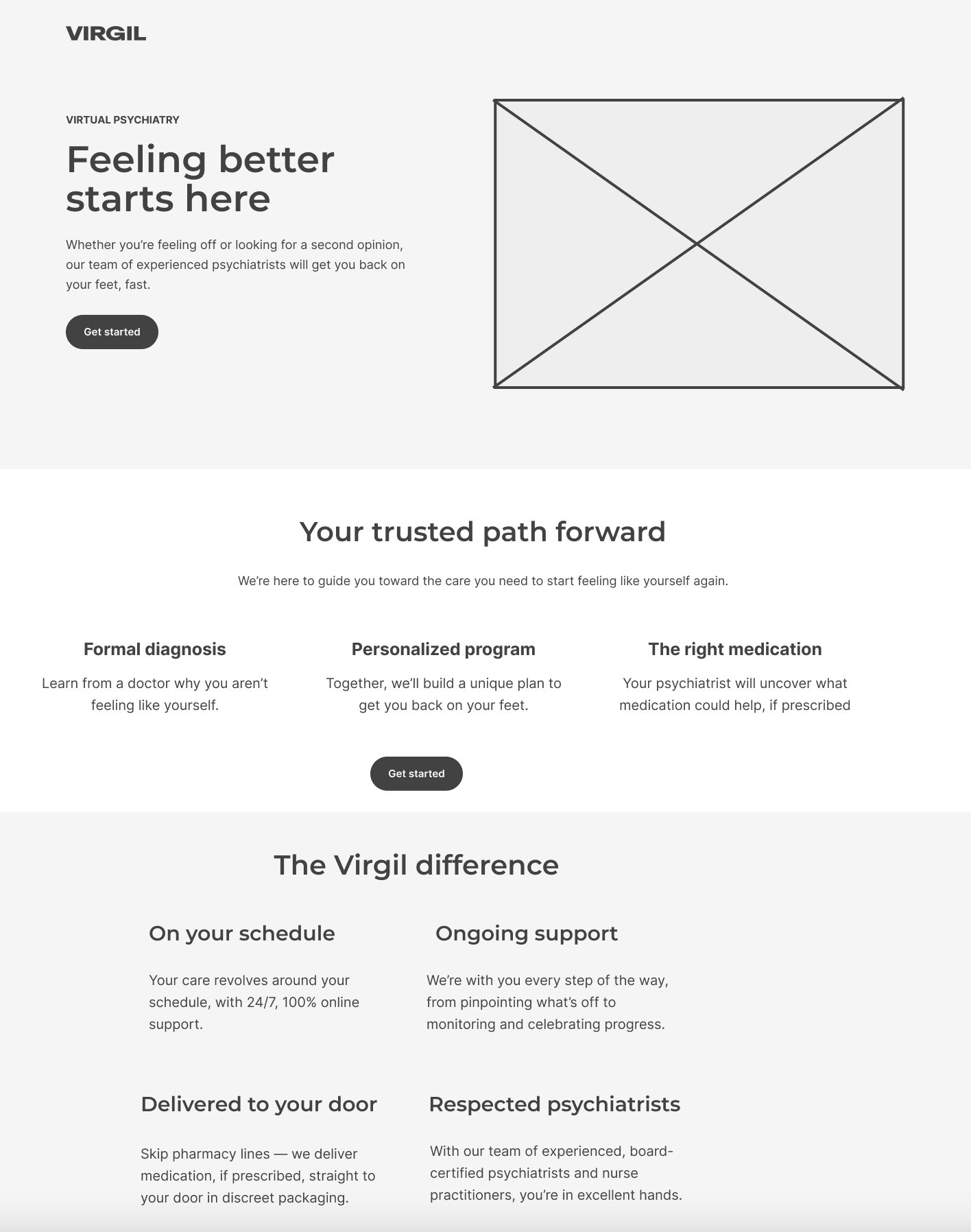
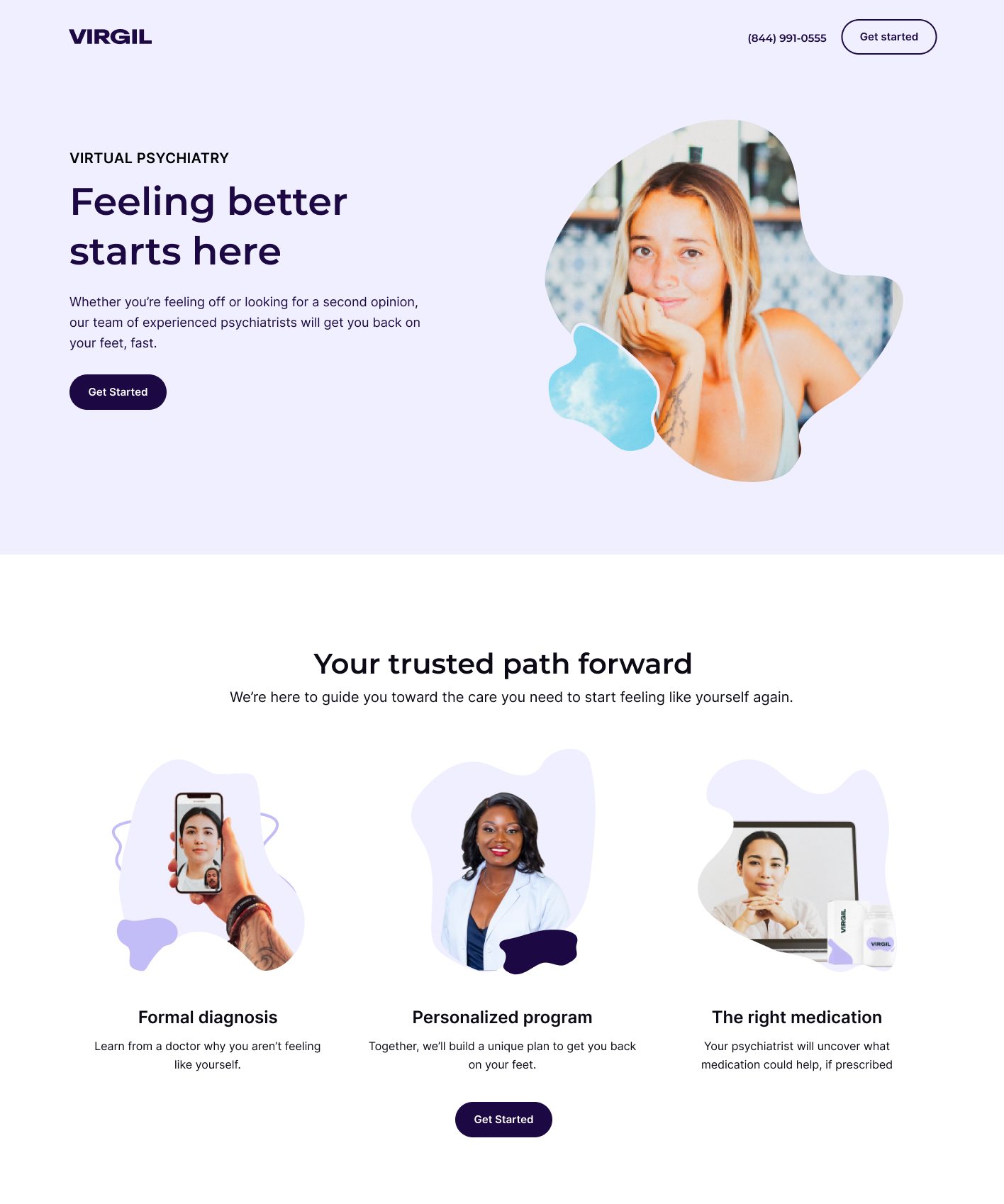
Having enough information together with the brand designer we created 3 landing page concepts to validate through multi-variant testing.